

Fire Compartmentation · Bournemouth, Poole & Dorset
Fire Compartmentation
& Fire Stopping
Across Bournemouth & Dorset.
Compartment-line surveys, penetration sealing, batt-and-mastic, riser fire-stopping and remedial works to restore the line of defence your building safety case depends on. Every sealed penetration photographed, referenced and recorded, so the work isn't just done, it's evidenced to a standard your FRA and insurer will accept.
FDIS Qualified · Firequal Qualified · BS 8214 Compliant · Bournemouth-Based
Service Overview
Fire Compartmentation:
The Brief, In Plain English.
What It Is
Surveying, designing and installing fire-stopping at every breach of a compartment line: service penetrations through walls and floors, riser shafts, ceiling voids, party-wall junctions and roof-space subdivisions. We use third-party tested systems (Rockwool, Hilti, Promat, FSi) matched to the substrate and penetration type, and record each one with photo, location reference and product detail.
Who It's For
Managing agents, RMCs, housing associations, commercial landlords, contractors mid-refurb and freeholders responding to a Type 4 FRA or building safety case review. Also developers needing pre-handover compartmentation verification.
When You Need It
After a Type 3 or Type 4 fire risk assessment, after intrusive surveys, during refurbishment when penetrations are opened up, after services have been added or moved, and as part of a planned compartmentation review cycle in higher-risk buildings.
Why It Matters
Compartmentation is the structural-passive fire-safety strategy that buys residents the time the alarm and stay-put policy assume. A single un-sealed penetration through a 60-minute wall can drop performance to under five minutes: and most blocks have dozens of historic penetrations from cable runs, pipework changes and old TV/satellite installs.
What Happens If You Wait
The Cost Of
Doing Nothing.
Compartmentation defects are invisible from a corridor. They sit above ceiling tiles, inside riser cupboards, in roof voids and behind service panels: places residents never look and old FRAs often skipped. Since Grenfell the regulatory bar has shifted decisively: passive fire protection has to be evidenced, not assumed. A clean fire alarm test on its own is no longer enough.
Risks Of Ignoring It
- →Compartment failure: smoke and fire spread between flats during an incident.
- →Type 4 FRA findings escalating to enforcement under the Regulatory Reform Order.
- →Building safety case rejected at registration with the Building Safety Regulator.
- →Insurance loaded, restricted, or withdrawn on a building with known passive-protection defects.
- →Resident-facing risk: smoke travel through riser shafts has caused the bulk of post-Grenfell prosecutions.
Common Mistakes Customers Make
- ×Stuffing mineral wool into a service penetration without an approved sealing system: looks compliant, fails on test.
- ×Letting M&E trades make a new penetration and seal it themselves with mastic only.
- ×Treating compartmentation as a one-off: services change and the line breaks again.
- ×Skipping the photographic record: without it the work effectively didn't happen, evidentially.
- ×Mixing manufacturer products in a single seal: voids the certification of all of them.
Our Process
First Call To
Final Sign-Off.
01
Inspection
Site visit at an agreed access window: measurements, photographs, scope and constraints recorded against your reference.
02
Diagnosis
Findings written up against the standard, BS or building safety case clause they relate to, with severity and priority assigned.
03
Proposal
Itemised quote, programme, RAMS and product/competency evidence: sent to the distribution list you nominate.
04
Works On Site
Tidy, resident-aware delivery. Dust control, drop sheets, daily clear-up and notified working hours. One named lead on site.
05
Sign-Off & Handover
Photographic completion pack, certificates and product traceability documents supplied for your file.
Why It's Worth It
What You
Actually Get.
Fast Mobilisation On FRA Actions
Most Type 3 FRA action lists are scoped and quoted within a week of the visit: keeping you inside the action close-out window.
Compartment Line Actually Restored
Third-party tested systems installed strictly to the system manual: no mixed manufacturers, no improvised seals.
Service-Life Sealing
Properly installed batt-and-mastic seals carry 60-minute integrity for the design life of the substrate: not a 12-month patch.
Avoids Rectification Costs
Getting it right first time avoids the second visit, the second scaffold, and the second resident notification programme.
Auditable & Defensible
Each seal photographed and recorded against a location plan: defensible at FRA, insurance audit and Building Safety Regulator review.
Peace Of Mind At Handover
Your accountable person can sign off the compartmentation strategy with evidence behind every entry on the schedule.
In Detail
Fire Compartmentation,
Every Variation Covered.
Materials, methods and the situations each variation applies to, so you know what you're buying before you buy it.
Working across
Bournemouth · Poole · Christchurch · Wimborne Minster · Ferndown · Blandford Forum · Dorchester
Full Service Area MapCompartment line surveys
We open up sample areas (ceiling tiles, riser cupboards, service voids) against an agreed sampling rate, photograph each penetration and record substrate, penetration type and current condition. The output is a prioritised remedial schedule referenced against the building floor plans.
Service penetration sealing: small bore
Single cables, small copper pipes and conduit penetrations sealed with intumescent mastic (FSi Pyrocoustic, Hilti CP 606 or equivalent) against the certified annular gap. Penetration logged with substrate, product reference and photo.
Service penetration sealing: large bore
Cable trays, bunched cables, plastic soil stacks, ductwork: sealed with batt-and-mastic or coated batt (Rockwool RW6 + Ablative Coated Batt, Promat S, FSi Ablative Batt). PVC soil stacks fitted with intumescent pipe collars rated to the floor's integrity period.
Riser fire-stopping
Vertical riser shafts are the highest-priority compartment to restore. We seal at every floor level with the certified system for the shaft type, typically batt at the floor slab with a service-level access hatch maintained for future M&E works.
Linear gap & movement-joint sealing
Head-of-wall, perimeter and movement-joint seals using compressible mineral wool plus intumescent acrylic, rated to the wall's integrity period and capable of accommodating the recorded movement.
Roof voids & loft subdivisions
Roof-space party-wall extensions to the underside of the roof covering, sealed at eaves and verges. Common defect in older terraces: and a frequent FRA action item.
Riser cupboard doors & access
Where compartmentation works open into a riser cupboard, we replace the access door with a correctly rated FD30 or FD60 set if the existing door is non-compliant: keeping the compartment integrity unbroken.
Questions
Straight
Answers.
Cost, timeline, documentation, lifespan, availability: the questions everyone asks, answered before you call.
Ask YoursWhat's the difference between fire-stopping and compartmentation?
+
Compartmentation is the building strategy: walls and floors designed to contain a fire. Fire-stopping is the workmanship that seals every breach in that strategy. You can't have one without the other and have either work.
How much does fire-stopping cost?
+
Per-seal pricing typically runs £35-£140 depending on substrate, penetration size and access. A typical 6-storey block compartmentation programme is scoped on a referenced schedule of works: total cost is a function of the number of defects, not floor area.
How long does compartmentation work take?
+
A 50-penetration remedial schedule in a block usually runs 5-10 working days for a two-person team, plus survey and quote stages. Larger Type 4 remediation programmes are phased to keep resident access intact.
Do you carry out the survey or just the works?
+
Both. We carry out the intrusive sample survey, write the prioritised remedial schedule and then deliver the works. This avoids the common gap between a surveyor's report and an installer's interpretation of it.
What products do you use?
+
Third-party tested systems from Rockwool, FSi, Promat, Hilti and Nullifire. Product selection is matched to substrate, penetration type and required integrity period: never mixed manufacturers within a single seal.
Will residents be disturbed?
+
Most work happens in communal cupboards, ceiling voids and riser shafts: limited intrusion into flats. Where flat-side access is required, we schedule against access windows and provide 48-72 hours' notice.
Do you supply photographic records?
+
Yes: every penetration is photographed before, during and after, referenced against the building plans, and supplied as a PDF compartmentation evidence pack on completion.
What documentation covers the work?
+
Each sealed penetration is photographed and recorded against the product datasheet. The certified life of each system is typically design-life of the substrate provided no future trades breach the seal.
Can you act as principal contractor on a compartmentation programme?
+
Yes: for projects under the relevant CDM threshold, with a written principal contractor agreement, RAMS pack and weekly progress reporting.
On The Job
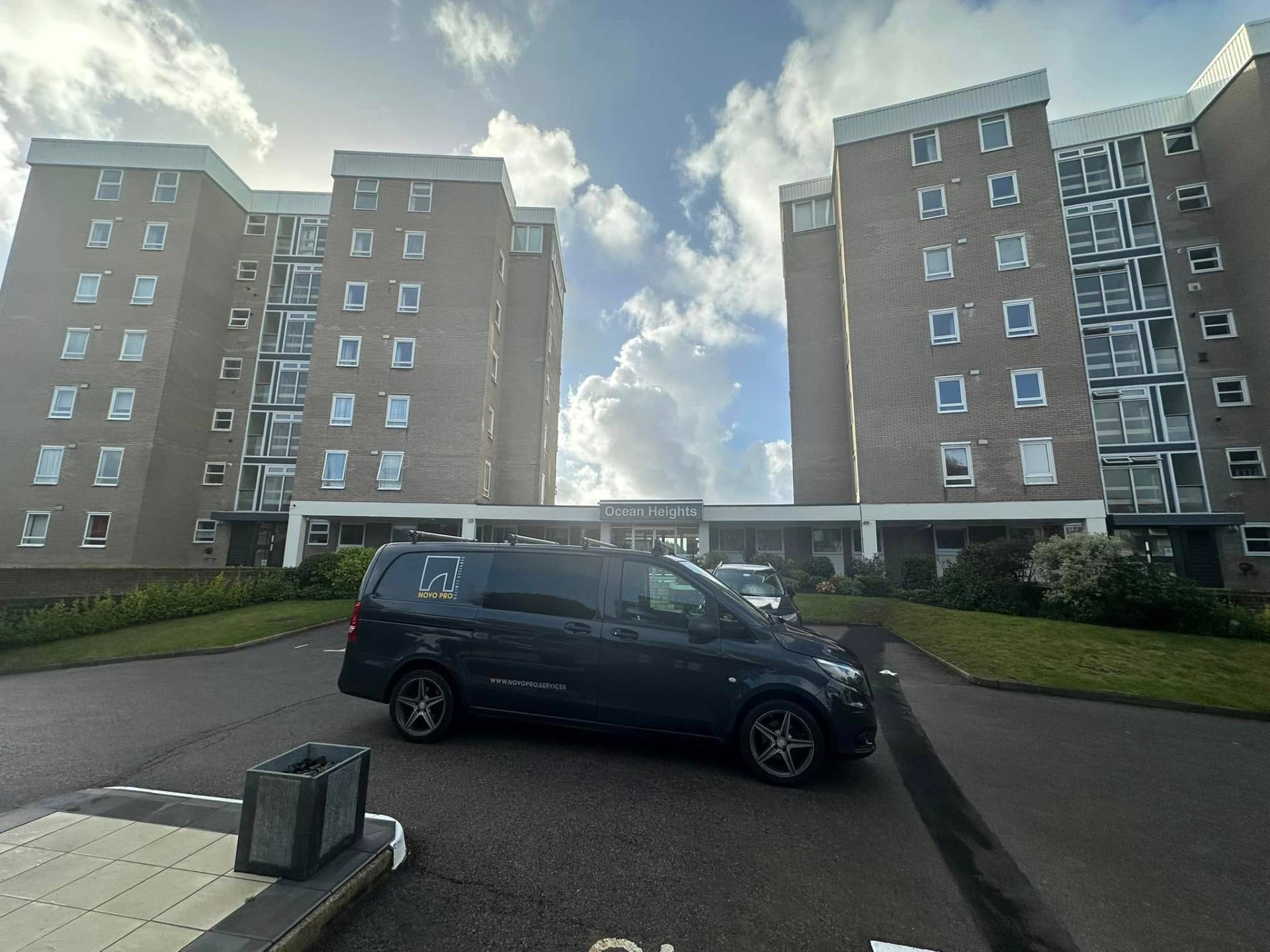
Fire Compartmentation & Wider Novopro Work.
A rolling gallery from live and recently completed jobs across Dorset and Hampshire.

Next Step
Restore Your Compartment Line: Book A Survey.
Site survey within our coverage area, written quote issued after the visit, no obligation. Bournemouth-based, covering Dorset, Hampshire, Berkshire and the South Coast.
Related Services